


🍪 Sakusaku, Mochimochi, Paripari?! The Fun Japanese Language of Food
Have you ever eaten something in Japan and thought, “How can I describe this texture?” 🤔
You can always say, “It’s delicious!” 😋
But Japanese has many fun words that help you describe exactly how food looks, sounds, and feels when you eat it.
These words are called onomatopoeia, and you can find them in many unexpected places — even on Japanese snack packages! 🍫
🍬 Onomatopoeia in Japanese Snack Names
In fact, some Japanese snack names themselves are connected to onomatopoeia.
Do you know Pocky?
Take Pocky, for example.
The name comes from pokkin, a word that describes the sound of something snapping or breaking.
When you eat Pocky, you can almost imagine the pokkin! sound as you break the biscuit.
Another example is Pack’n Choco (Pack’n Cho).
The name comes from pakun, which describes the action of taking a quick bite.
The name itself gives you an image of someone happily taking a bite! 😋
There is also Sakusaku Panda. 🐼✨
As you might guess from the name, sakusaku describes something that is light and crispy.
It is a perfect word for describing the texture of many Japanese snacks.
And what about Garigari-kun?
Garigari can describe the sound or feeling of biting something hard.
It is especially suitable for an ice pop that you can crunch into! 🍧


🍙 How Does Your Food Feel?
But onomatopoeia is not only found in snack names.
Japanese people use many of these words to describe food textures in everyday life.
For example:
* sakusaku – light and crispy 🥐
* karikari – hard and crunchy 🍪
* paripari – thin and crispy 🍘
* mochimochi – soft and chewy 🍡
* fuwafuwa – soft and fluffy 🥞
* nebaneba – sticky 🫘
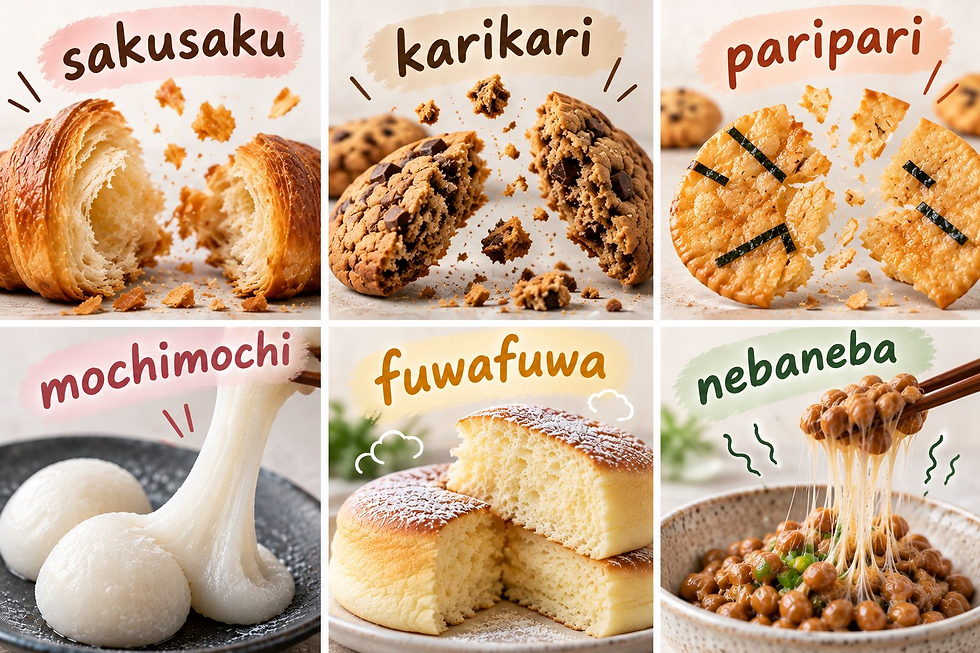

Imagine a piece of toast that is sakusaku on the outside, or mochi that is mochimochi and chewy.
These words make it easier to imagine the food — and they can make a simple description much more interesting! ✨
So, next time you visit a Japanese supermarket or convenience store, take a closer look at the snack shelves. 🛒
You might discover a new way to enjoy Japanese food! 🍙
You might also discover a little Japanese language hidden in the name or packaging.
Learning Japanese is not only about studying grammar and vocabulary.
Sometimes, it is about noticing these small and fun details in everyday life. 🇯🇵💛
Discover more about Japanese language and culture while building your confidence in conversation.
At Tomo Japanese Language School, our lessons focus on speaking, listening and real communication.
Join us and start speaking Japanese! 🌻
Manae


Comments